I Can Only Draw Worms by Will Mabbitt made me laugh and smile. I initially thought it was perfect for kindergarten and first grade. I was a little bit on the fence for second grade because the text is simple, the drawings are simple, there's a bit of math and a bit of writing thinking. Nothing was strongly swaying me to purchase this book until my friend read it and belly laughed through the whole book. I then knew this book was something for any grade. We need to laugh more.
The book begins as a counting book; adding a worm each page or two. Along the way the writer begins to write little stories about each worm. The little stories are some far out ideas for worms. Before we meet worm eight there's a dreadful accident. We now have two half worms! Here's a bit more math in this funny book about a writer who can only draw worms.
The dedication is at the end of the book and is perfect for anyone who enjoys math or not.
Showing posts with label Math Monday. Show all posts
Monday, April 8, 2019
Monday, April 1, 2019
Shuffleboard Becomes a Math Warm Up {Math Monday}
I love discovering #mathinmyworld opportunities to share with our students and I've let this idea get put on the back burner for a bit of time. While playing several games of shuffleboard and doing lots of mental math as the score keeper I decided I not only had an example of math in my world - I had a math warm up activity. Today I shared what shuffleboard was, showed a picture of the court, explained how to play and got really excited about the force and motion involved, and then I explained the scoring. I gave the students partners to work with and asked them to figure out how many points were scored each round or turn. I saw some puzzled looks and modeled the first two rounds with a table to help keep track of my thinking. The room became a gentle buzz with productive math talk. Definitely an idea to play around with more - maybe there's a new math warm up routine here. It's easy to see writing and reading in our world - let's find, share, and discuss math in our world that's relevant and applicable for our students to wrap ideas around.Monday, November 26, 2018
Choral Counting and Counting Collections {Math Monday}
At our recent state math conference I heard positive reviews for Choral Counting and Counting Collections written by Megan L Franke, Elham Kazemi, and Angela Chan Turrou. I had previously read a little bit about counting collections and as I pondered about my current mathematicians I wanted to explore these two activities further. I think curriculum changes have de-emphasized the importance of choral counting and looking for number patterns which foster number sense.
This book is written for K - 5 classrooms and I'm thrilled to share there are plenty of examples in the text stretching what might appear as K-2 activities. I'm quite fascinated about the visual recordings and the different decisions a teacher can make to help foster number thinking. Discussing what students notice is a great tool to make thinking visible and supports striving mathematicians. I'm pondering how the ideas in this book help mathematicians work with fluidness through the CRA model; Conrete, Representational, and Abstract with the Choral Counting having us work through this in a backwards manner.
- make a visual record of choral counts
- rearrange how these choral counts and records are recorded
(horizontal or vertical and how many numbers in each row)
- implement counting collections
- ponder whole class counting collection day or as a menu activity
- discuss what we notice from choral count records and celebrate noticing
Quotes that are sticking with me
"When we leave the activity open for young mathematicians to reason about structure, quantity,and organization, we allow them to problem-solve, to build on their own ideas and those of their classmates, and to grapple with what makes sense."
"While accuracy is important in counting, we caution agains making accuracy the ultimate focus...too narrow of a focus on accuracy can zap that joy and wonder."
"In the same way that reads learn to select just-right books, young mathematicians learn how to set just-right challenges for themselves."
Monday, August 13, 2018
Thinking Together 9 Beliefs for Building a Math Community {Professional Read}
Thinking Together 9 Beliefs for Building a Mathematical Community by Rozlynn Dance and Tessa Kaplan is a book worth having to start a new school year with and one to revisit during the school year. It's an easy book to read and won't take long if you are feeling the back to school crunch or starting right now, like many of us in Central Ohio.
I love their child centered belief statements. They are worded in kid friendly language and get to the core of classroom community for math workshop; Good mathematicians are brave and try new things and it's not just about the answer are two I can't wait to focus on and believe all of our students need help with. Questions from the teacher helps us grow and learn is one I don't know if I've really spent time on in the past and realize it's an important belief to help build their confidence and chase worries away.
Nudges I found to try within my own work
- read the book,Chrysthanemum - discuss disrespectful treatment more in-depth
- model and post sentence stems to help develop language
-use their math attitude survey p39
-instead of thumbs down for disagreeing, tap your brain
-use this sentence stem to help students to help students explain their exact steps..."First I _____, next I ______, then I ______.
-teach the difference between a question and a statement
Quotes that are sticking with me
"Simply put - the process is more important than the product."
I love their child centered belief statements. They are worded in kid friendly language and get to the core of classroom community for math workshop; Good mathematicians are brave and try new things and it's not just about the answer are two I can't wait to focus on and believe all of our students need help with. Questions from the teacher helps us grow and learn is one I don't know if I've really spent time on in the past and realize it's an important belief to help build their confidence and chase worries away.
Nudges I found to try within my own work
- read the book,Chrysthanemum - discuss disrespectful treatment more in-depth
- model and post sentence stems to help develop language
-use their math attitude survey p39
-instead of thumbs down for disagreeing, tap your brain
-use this sentence stem to help students to help students explain their exact steps..."First I _____, next I ______, then I ______.
-teach the difference between a question and a statement
Quotes that are sticking with me
"Simply put - the process is more important than the product."
"We let our students know that disagreements are not a negative thing but something wonderful, as they show that we are thinking deeply about math, allowing our brains to grow stronger."
"The structures we set up in our classroom and the community we build can support our students as they persevere through productive struggle, encouraging them to continue to persist when things get tough."
Monday, April 30, 2018
Listening In and Number Lines
We were near the ending of our math workshop. Last week we looked at using a number line to help us show different ways to make a total money amount. We named our work, Ways to make 35 cents. This wasn't my own idea. I'm in love with the resource Math in Practice A Guide for Teachers and was using an activity and paper from this resource.
We took time to notice the number line. It started with 0 and ended at 100. There are lines in-between but not 100 lines. I heard students trying to count lines using skip counting by 10. I then heard some students trying to count lines using skip counting by 5. I modeled how to show one way to use the number line to show ways to make 35 cents. Together we used the number line to model two different/more ways to make 35 cents.
I wanted to show how to use number bonds to show different ways to make 35 cents and starting to shift our work. I mentioned the number line is one tool we could use to show ways to make coin collections and a student who needs extra support sometimes asked, "Can we put this in the math area?" I was confused at first. I wondered why she would want to put the paper she worked on in the math area of our room. Then I thought a bit deeper and asked her if she would like papers like she used today in the math area. She said yes, blank ones. I confirmed blank papers on the shelf with our graph paper and ended my thinking with some inflection indicating I was changing this phrase to a question.
She was so excited to say, "YES!" I stopped right there. What a great idea and was puzzled why I hadn't thought about this before. It's a great math tool - a graphic organizer that can be tricky to draw for some students. I had previously taught them how to use open number lines as a tool to show skip counting, adding and subtracting and now I'm thinking the structure of the lines on this graphic organizer and having them show increments of five might really help support some mathematicians. Maybe an open number line is overwhelming for some students. I'm so excited this student spoke up. It's made me stop and think about different math organizers I could put in our math area to support them for different units of study. It's made me stop and think about scaffolding number lines. It's made me stop and realize it's important to have these graphic organizers accessible for when the students want and find a need to use them.
Monday, April 23, 2018
How Many? {Math Workshop}
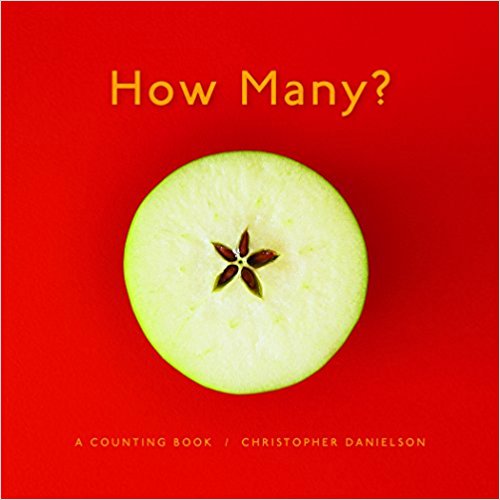
It took me all of thirty minutes to settle in from being gone all day, read my newest math book, How Many? by Christopher Danielson and then open my laptop to write this blogpost. I love to look for math in my world and this book is an invitation to do just that. It encourages the reader to go beyond the obvious numbers you see at a glance and take time to observe with a new lens; multiple lens.
I love how the introduction encourages the readers to make choices with what they want to count and how they want to count. He also encourages readers to linger and says the more time you spend with a photograph/page the more you will see. I just felt the need to slow right down there and enjoy this book. The book begins with three pages and text guiding the reader for things they may see in a box with a pair of shoes. Have you ever thought to count the eyelet holes for laces or the stitching lines? The possibilities are more than two shoes. After reading the introduction I instantly eager to see beyond the obvious on each page. For example the egg carton has one egg but I started counting the empty egg spots first.
Counting is often thought of as a primary emerging mathematician skill. This book reminded me counting expands across topics within mathematics. Beyond counting objects, I found myself working with multiplication and fractions. The images in this text are perfect examples for placing mathematics in every day context. The end of the book lists some questions to encourage the reader to revisit the previous pages with a new focus or two. The questions felt like an invitation to linger and then my mind started racing for images I might want to take around my house and share with the question, How Many? I think this will make a great math workshop warm up activity. This will also be a book I recommend to families. It's easy for families to see how to have literacy conversations and to place literacy invitations in their homes. We need more guidance for math invitations.
Monday, April 16, 2018
which one doesn't belong? {Math Workshop}
One morning each week my students are greeted with an image for a math activity created by Christopher Danielson, which one doesn't belong? I've been gathering my weekly post from a simple Google search. I knew Christopher had published a book, which one doesn't belong? back in 2016 and didn't really know if I needed it. I was preordering his next book, How Many? and decided I should probably have the first one too and I'm so glad I ordered it.
I love the opening page. How many times are we told every answer can be correct? This is also why I love this activity. Each student's thinking is correct as long as they justify their reasoning. I'm often caught off guard with reasoning I haven't thought of.
This is a great book for introducing the activity, Which one doesn't belong? The first six pages guides the reader through looking at the same picture and giving reasons why each shape may not belong. There are 9 images that follow for further class discussion. I wish I had used this book to introduce the activity earlier in the year. We will definitely be looking at it this week for our weekly thinking and I think it could be a helpful tool for launching student's creating their own; Which one doesn't belong?
Monday, November 6, 2017
Step Back {Math Narrative}
I was launching a unit on telling time and decided to use an idea from Math In Practice, Teaching Second-Grade Math by Susan O'Connell, John San Giovanni, and Allison Peet. They suggest having students build a human clock to help understand the clock is a circular number line. I followed their suggestions got twelve students started and sat down with the rest of the students to observe.
My eyes darted from conversation to conversation. I noticed the students who were leading the work and those who observed and waited to find their placement. I observed some more as their work gathered momentum and then I smirked. I found my teaching point. I found a misconception. Students had placed twelve at the top of a circle but then placed 11, 10, 9, and 8 to the right of the 12 where 1, 2, 3, and 4 should be. They completed their circle and no one looked back at an analog clock to catch this slight error.
I had the students count around the circle as I held up a Judy clock. A small panic struck our room and students started to show faces of, "that's not right." We looked at the Judy clock together and our "that's not right" faces turned to "we've got this" and instantly they were rebuilding the clock the "just right way". Everyone wanted to try this so we had a second group try and we discovered they built a human clock much faster. This led us to a discussion about learning from others and trying more than one time to do something.
When I attended our local state math conference a couple of weeks ago, @mlipinos used the words, math narrative and I was intrigued. Maybe stepping back and taking time to observe we help us all capture math narratives.
Monday, October 30, 2017
I Know Numbers!, My Newest Math Picture Book
I Know Numbers! by Taro Gomi is my most recent math picture book purchase! I've been talking with students for years about numbers in their lives and this book is a great addition to this line of thinking. A variety of characters, young and old share different ways numbers are a part of their daily life. There's a boy checking his temperature wondering if tit's high or low. The look of worry on his face is so realistic. I love the page with the mama weighing herself and I'm happy to share it's a happy weight for mamas. There's an old rotary dial phone and a television with number buttons on the actual Tv base. Clothes and shoes are being tried on, various sporting activities use numbers, and numbers show distance. Lots of great examples to spark some thinking about the relevancy of numbers within our daily lives. The illustrations are warm and demonstrate the how numbers of used. Makes sure you give plenty of time for students to soak those in!
Sunday, April 9, 2017
Even Steven and Odd Todd {Math Monday}
I just discovered Even Steven and Odd Todd by Kathryn Cristaldi to use during math workshop. Even Steven and Odd Todd are cousins and complete opposites. Even Steven is very organized and likes to have equal groups of objects. Odd Todd enjoys odd things and groups of things that can't be shared equally. My students really enjoyed figuring out how the character names connected to the actions each character did within the story. The story begins with Even Steven making 12 pancakes for breakfast so he's have 6 for lunch. His plan had potential until Odd Todd eats 3 pancakes and Even Steven gets mad. Their interactions continue to have some frustrations and funny moments while leading the reader to think about odd and even numbers.
Monday, January 16, 2017
Can you count backwards from 100 by 7s? {Math Monday}
My in-laws were here over the holidays and my father in-law mentioned he just had his annual physical and everything went well. He shared they asked him to do two tasks and he thought it was to show mental wellness. When he told me the first task, I knew right away he passed that with flying colors. He had to recite the alphabet backwards and he's been doing that for as long as I have known him. A task I can't do.
When he shared the next task I was worried but he didn't act worried. The task was to subtract 7 from 100 down to 0-ish. He didn't let on he couldn't do this or that he struggled so I wanted to know more and started an investigation. I was envisioning regrouping mentally and I was stumped because it was taking me too long to think it through. I asked him how he figured this out and he said, "oh it was easy - you subtract 7 one time and then subtract 10, adding back 3 each time." I had to ponder and visualize this; only to confirm he was right.
I would assume much of my father in-laws math education involved learning how to regroup. I was so proud of him for using an effective strategy to show his mental wellness. Often parents I work with struggle to understand how strategies other than regrouping can make sense and be effective. I'm going to share this little nugget with people when they need a concrete example for why we teach different strategies.
I also think this is a great story to share with students who also need to know why we study things and why different strategies can be helpful.
Monday, November 7, 2016
Low Floor High Ceiling Problems {Math Monday}
Several sessions at OCTM - Ohio Council Teachers of Mathematics mentioned and sited resources for Low Floor High Ceiling math problems. These are problems everyone can have success and be engaged with. If you would like more information rich.maths.org has this great article, Using Low Threshold High Ceiling Tasks in Ordinary Classrooms. I made a padlet with direct links to some fabulous resources for a staff meeting this week and thought this might be interesting for my readers. If you have a resource to add to the padlet, please let me know by leaving a comment.
Monday, October 31, 2016
Top Ten Things I heard from Math Heroes while at #ohioctm16, a Math Conference! {Math Monday}
This past Thursday and Friday I had the privilege to attend our local state math conference. This wasn't my first time to attend and it won't be my last. This year the conference had more attendees, more sessions, big ideas, and I found myself finding great ideas shared and/or new learning in each session. Passion fosters excitement and the presenters I spent time with were passionate, positive, and became my heroes. This list will just touch the surface from my two days, if you would like to know more about something let me know.
Top Ten Things I heard from Math Heroes while at #ohioctm16, a Math Conference!
10. pbslearningmedia.org - is interactive and has relevant media to promote mathematics. It can be personalized and is aligned to the common core. The layout is much like Discovery Education.
9. Mathematical Mindsets by Jo Boaler is a must read and her website youcubed.org has a wealth of low floor to high ceiling type problems we should be using in our classrooms. These types of problems can be presented to the whole classroom and allow for varying levels and needs be successful.
8. RTI doesn't mean same materials for all but watered down or taught again in smaller groups. Tier 1 groups might get some front loading for the next lesson. Tier 2 students might need some reteaching and a little detective work to figure out where their breakdown is for the concept being taught. Tier 3 students need different instruction and lots of reteaching in very small groups, 1 - 3 students.
7. For Tier 2 students you might want to look at Cognition Based Assessments by Mike Battista to figure out the understandings your students have and need. Mike Battista is a professor at The Ohio State University. In each of his books, he offers an assessment and suggestions for activities based on student responses. There is also an insightful trajectory for learning.
5. Zearn is a computer system that goes well with Eureka Math aka ENY. You have to register for it but it's free and is based around a growth mindset. These videos are about the mini lesson being taught and offers another way for students to learn via reteaching a concept, a possibility for Tier 3 students along with Do the Math by Marilyn Burns.
6. Engage NY was written for the state of New York and is now found with big updates in K, 2, and 6 at greatminds.org. They have parent components, videos, all the lessons and things needed to teach their lessons. There are even some games included. You have to register for an account but again this is a free resource.
5. "data can look good, but we might be teaching them shortcuts instead of learning the mathematics" from Carl Jones. He has been a long time member of OCTM and is now a professional development coordinator with a website to check out. He spoke a lot about mathematical mindsets too and things to make instruction better.
4. Fact fluency is more than the basic facts. It's subtizing, unitizing, ten frames - any visual recognition of number arrangements. Sprints by Eureka Math were the only suggestion offered to help with fact fluency involving paper and pencil. Games were mentioned in several sessions because they offer practice in a fun, engaging, and meaningful way.
3. "remembering is a different part of your brain than rote memorizing" in a session where Char Shryock spoke about the importance of using games and offered suggestions for hosting Family Game nights with a concept focus to help parents understand different strategies. You will want to catch her blog iteachbay.blogspot.com
2. No more timed fluency tests came up in several sessions. This fact was shared by Kim Sutton, "Timed math fact test are good for 17% of the learners, these students thrive on getting faster." Jon VandeWalle found in his research; if you must do fluency test 3 seconds per problem orally and if written 5 seconds per problem.
1. The conference, #ohioctm17 will be in my hometown next year, Columbus Ohio. I hope you'll consider joining us and watch the OCTM website for more information.
Monday, October 3, 2016
Pondering Math Representations {Math Monday}
I loved how E was able to connect these three numbers as one; a sum. His drawing made me think about bar models and wonder if we tried to draw the problem with a bit more reality could bar models make more sense. A couple of years ago I tried to jump right into modeling and encouraging students to use bar models as a way of making sense of their math problems. It was challenging and harder than I thought. I knew better but the district resource made it look so easy. I'm wondering now, if we encourage more drawing prior to introducing bar modeling would there be a deeper understanding and easier transition to using bar models as one problem solving strategy.
Monday, September 26, 2016
Linking Math and Reading for Clarity {Math Monday}
When I started teaching, estimating was frequently done; maybe weekly to help build number sense. As standards and time have changed, it seems the love classroom teachers and students once had for estimation has faded. I don't think I realized how much it had faded until today during my mini lesson.
I was measuring a crayon box to demonstrate how you can use a physical unit, a centimeter cube and use multiple copies of the physical unit to find the length. I placed random spaces between the centimeter cubes and we discussed right away how the gaps of space weren't supposed to be there. I was then able to introduce measuring by starting at the endpoint/beginning of an object. As I switched to measuring the width of the crayon box, I asked my students to make an estimation about the crayon box width.
Several students asked me what the word estimation meant. I saw several faces with a puzzled look. My student's expressions showed a look of questioning and wanting to understand more. I then made a connection to our work in reading and their looks of puzzlement went away. Estimating is like predicting as readers. It's so important we take the time to make connections between subject areas/disciplines.
Monday, September 19, 2016
Writer's Notebooks inspire Math Journals {Math Monday}
As I reflected this summer about my math journals, I realized they had really become a math problem solving journal. I had gotten away from student reflection, quick writes, and questioning that were once part of my math journals. I wanted to make some changes and started tweeting with my friend Kassia, @kassiaowedekind as our conversation progressed another friend Kristin, @MathMinds joined in and our conversation went with how to set up the math journal.
Kristin shared she has spiral and composition notebooks, she wants the students to have choice and to quote our tweet - "I just really wanted them to own it and not have the journal be something they saw as something they did for me."
I instantly thought about setting up writer's notebooks and how we let students decorate them for ownership. I then thought I could do this for our math journals! It's important to show student's how numbers are used daily and to make connections between them and numbers in our world. I knew over the years I had done a lesson maybe called Numbers and Me and started looking through a few resources.
In Minilessons for Math Practice, Grades K - 2 (intermediate friends there is a version for you) by Rusty Bresser and Caren Holtzman there's a lesson called Fit the Facts which was the perfect entry point for personalizing our math journals. I didn't want my young students just grasping at numbers to use and wanted them to have some preplanned options. Fit the Facts really helps students think about the reasonableness of numbers in context. For homework, the students found out numbers for their age, grade, address, height, miles away from school, favorite number, siblings, and pets. The goal for the class discussion for each student is to offer a student's numbers only, read them and then try to reason the best one for each sentence.
After discussing three student's Fit the Fact information I modeled ways students could pick 3 - 5 ideas from their homework to use to illustrate the front cover of their math journal. I also shared they could add one or two new ideas they have for numbers in their lives. It was so fun to watch their excitement as they personalized their journal covers and thought about numbers in a fun personal way.
SaveSave
Monday, September 12, 2016
Hundreds Chart Resource {Math Monday}
Last week I was doing some addition and subtraction work during math workshop and discovered a third of my class was having difficulty taking ten away from any given double digit number. I was a bit surprised. I started to try and figure out why but quickly decided it didn't matter. What did matter is I needed to help my students become more flexible with numbers from 0 - 100. I knew the perfect tool I wanted to use was a hundreds chart.
I knew the perfect resource I had at home and hadn't really used yet was, It Makes Sense! Using the Hundreds Chart to Build Number Sense by Melissa Conklin and Stephanie Sheffield. Whenever, I want to understand math mathematics more as a teacher or have my students develop their understandings further I always go to a Math Solutions resource.
It Makes Sense! Using the Hundreds Chart to Build Number Sense begins with a How to Use this Resource section which grounds a teacher's reasons for using a hundreds chart; we want to help students build a mental model of our number system. The goal of the lessons provided in this resource is to give students chances to think, reason, and talk about numbers. The lessons do build on each other and there are activities you can use to mirror or follow up a lesson with. These would be great for small group work or independent work during math workshop.
I have some friends who are uncomfortable teaching math and I have some friends who love teaching math. This book is for everyone. Each lesson has these components; overview, related lessons, key questions, teaching directions, teaching tip, technology tip, differentiating you instruction ideas, extensions, time savers, and ideas for when to end the lesson. This list looks exhausting but I promise the text for each section is short and sweet. Another added bonus within this book are pages filled with teacher reflection for each grade level K-2. I don't know about you but I'm always looking for examples for the specific grade level I'm teaching that year.
This past Friday I did Lesson 2, Building the Hundreds Chart (Version 2) and my students loved it. They were totally engaged in math talk. I learned which students really struggled adding or subtracting ten because they waited and would only place their numbers when there was an adding or subtracting one situation. I will revisit this lesson with a small guided math group or two this week. Today we are going to do arrow math together and then I'm going to use it for the rest of the week as an option during math workshop. I envision writing arrow math clues for each other in hopes of creating more flexible mathematicians.
Monday, January 11, 2016
Math Monday - Fact Fluency - Why Twitter?
Last week I began my yearly wrestle with fact fluency because what I know to be best isn't easy. It takes articulation, documentation, trust, practice, and time. I trust my decisions but when your decision isn't a timed test, you sometimes want and need reassurance. I began with a Google search about fact fluency and discovered these recent gems from National Council Teachers of Mathematics.
Then I thought about some of my mentors in teaching mathematics; authors I've read and people I follow on Twitter. One reason I love Twitter is the accessibility to people willing to share ideas. When I get stumped, I often think of a mentor and wonder how they would answer the question. I figure if they are on Twitter, they are willing to have conversations and share ideas with people. So, I reach out and ask my questions and every time my mentors have been so helpful. Look at these two Twitter conversations I had last week and I'm sure you will want to start asking mentors questions or maybe even start using Twitter!
Previous posts about Fact Fluency can be found here.
Monday, November 9, 2015
Math Monday: Make Your Own Place Value Disks
This past summer I learned about new math manipulative - place value disks.
The ETA - Hands 2 Mind website offers this description.
"Place value chips (disks) are non-proportional models that can be used once students have a solid understanding of our place value system. Colored chips with values imprinted on them allow students to develop strategies based on properties, reinforce traditional algorithms, and build understanding of the meanings of mathematical operations and other topics such as rounding to the nearest."
We wanted to order some as a grade level. As I began looking at various vendors, I soon realized to order the recommended amount for five sections of second grade we needed to spend between $450.00 and $500.00. Yikes! Everybody has a budget or should choose wisely how to spend any budget money available.
I then began brainstorming because when I began teaching we repurposed many common objects and turned them into tools for the classroom; bread tags, bottle caps, old screws and nails, and old keys to name a few. Beans were the best counters around. Then I realized, poker chips could be place value disks. Sharpie markers could be used to label them.
We got them for five classrooms for just $45.00! It did require a bit of work labeling them but by saving money here I was able to order everyone true yardsticks and true meter sticks for each classroom. It's hard to teach what a yardstick is, if it's 39 inches on a meter stick. I purchased ours at a one of my favorite, "old fashion" stores - Star Beacon. I believe you can order from them online or at least call and they ship anywhere.
Monday, October 26, 2015
Math Monday - Wrestling with Fluently and Memory
In February of this year, I wrote a post Math Fact Fluency has Literacy Connections and here I am back wrestling with -
Fluently add and subtract within 20 using mental strategies.2 By end of Grade 2, know from memory all sums of two one-digit numbers.
I was thinking and driving this week and realized this standard has two words I need to wrestle with; fluently and memory. I got a little bit excited because it reminded me of my work with two other tricky words while teaching kindergarten; prompting and support. Let's look at the definitions for fluently and memory.
fluently - spoken or written with ease
memory - the mental capacity or faculty of retaining and reviving facts, events, impressions, etc., or of recalling or recognizing previous experiences.
I want to jump up, dance and start singing! These two definitions don't include a set number of problems. These two definitions don't include an amount of time. These two definitions don't include a clock! But now I want to look at another word - ease.
ease - freedom from difficulty or great effort; facility: It can be done with ease.
I find these three definitions quite interesting and having a place in my math workshop. I see verbal and/or written recall as an option. I see the need for students to easily use their memory to recall basic facts just as they recall the letters of the alphabet. Here's an interesting thought I just had, we don't ask student to write the letters of the alphabet under a minute why would we ask students to do this with math facts? I see students working on learning their basic facts without worry and difficulty. This might mean looking closely at students needs and working with them in different ways. We have students identify letters of the alphabet orally, why not have them show fluently, memory, and ease of basic math facts orally? We surround emergent readers with stories, predictable language, shared readings and read alouds. Let's surround our mathematicians with math stories, mental strategies, math games and images of math. I think this will guide our students work towards fluently, memory, and ease with addition and subtraction.
Subscribe to:
Posts (Atom)