Showing posts with label Nonfiction 10 for 10. Show all posts

Monday, February 10, 2020

Welcome to #nf10for10 with Books for the Zoo

Welcome to Nonfiction 10 for 10 for 2019!  We are so excited to have you stop by today and explore nonfiction books with other book lovers.   The three of us; @mandyrobek@cathymere, and @jacbalen can't wait to connect with everyone and we are grateful to learn from each of you stopping by today.  Please share the link to your post in the comments at Cathy's blog - Reflect and Refine and use the hashtag #nf10for10 on social media platforms.       

A year ago I started volunteering at our local zoo.  It's very fun and last month I had a thought.  The zoo would be a fabulous place to spark and promote nonfiction reading.  I began wondering how the zoo could do that and envision an informational board with maybe five book titles per animal or one book title with a QR code for more.  I wonder if the public library could partner with curating these list or maybe it's something offered on the zoo website for families.  Here's ten books I'd start placing on lists for families.
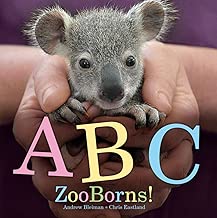
ABC: Zooborns!

ABC ZooBorns! by Andrew Bleiman - is an alphabet book highlighting baby animals with a close up photo.  After each animal is identified there's one sentence with a little fact easy for beginning readers to understand.

ZooBorns!: Zoo Babies from Around the World

ZooBorns! zoo babies from around the world by Andrew Bleiman grabbed my attention right away when Beco a baby elephant from our zoo was the first animal shared.  Each baby animal has full page photo spread.  We learn the "personable" name of the baby animal and a fact or two that makes sense with the photo.  Did you know animals at the zoo have names like Rosie?
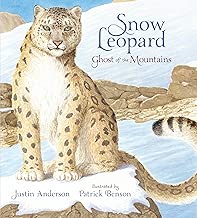
Snow Leopard: Ghost of the Mountains

Snow Leopard Ghost of the Mountain by Justin Anderson was my sneak peak a couple of weeks ago.  Readers will find this narrative story filled with language that is descriptive and informative.  In reading about a snow leopard's paws; "They are huge - it's as if she is wearing shoes that are much too big!  They help her to spread her weight and travel across the deepest snow without sinking."
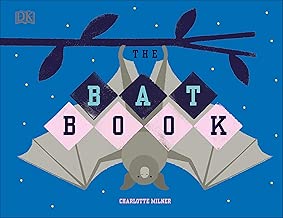
The Bat Book

The Bat Book by Charlotte Milner helped me understand more about the exhibit I least enjoy.  We have some very large bats and how they hang upside down creeps me out AND I learned they have to do this because they can't take flight from the ground as birds do.  The layout is warm, inviting, and easy to follow.  I also learned some really interesting ways bats are helpful to our ecosystem.

If Polar Bears Disappeared (If Animals Disappeared)

If Polar Bears Disappeared by Lily Williams is a favorite in our classroom with the recent birth of our baby polar bear.  This book helps support the idea of conservation and how losing polar bears would have a ripple effect to other species.
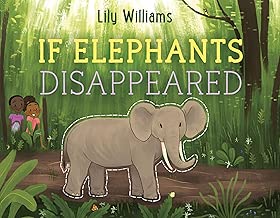
If Elephants Disappeared (If Animals Disappeared)

If Elephants Disappeared by Lily Williams follows the same idea as polar bears and could also help rally some activists for this beloved creature. 
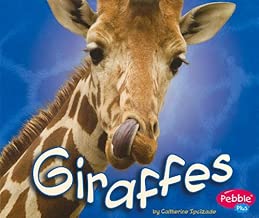
Giraffes (African Animals)

I might be sneaking in more than ten here with this title, don't tell Cathy Mere.  Pebble Plus by Capstone Press has a collection of beautiful books for early readers on one specific animal in each.  Photographs capture the animals in their natural habitat and the text compliments each photo with just the right amount of information.
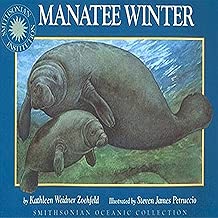
Manatee Winter: A Smithsonian Oceanic Collection Book

Manatee Winter by Kathleen Weidner Zoehfeld is an older book and a gem.  It follows a mother and her calf and shows readers how manatees can be harmed by boats.  Our zoo is a rehabilitation center for manatees and releases most of  of our visitors back to the wild with updates about their successful reentry.
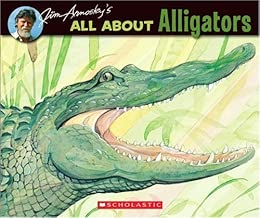
All About Alligators (All About Series)

Another older book I enjoy is All About Alligators by Jim Arnosky.  Right away he addresses and distinguishes the difference between an alligator and crocodile.  These older books help students see informational text can have hand drawn images and still share information.  We discovered this year a big misconception that photographs automatically meant it was nonfiction.
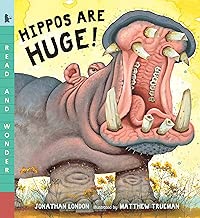
Hippos Are Huge! (Read and Wonder)

HIPPOS ARE HUGE by Jonathan London is a book I wish we could use at our zoo.  We don't have hippos and this book brings hippos to life for the reader.  The illustrations are big and focused with fascinating facts in larger print with more detailed facts in a smaller print.  Did you know the hippo is the second largest animal to the elephant?


Sunday, February 10, 2019

Welcome to #nf10for10 with Books for Growing/Gardening

Welcome to Nonfiction 10 for 10 for 2019!  We are so excited to have you stop by today and explore nonfiction books with other book lovers.   The three of us; @mandyrobek@cathymere, and @jacbalen can't wait to connect with everyone and we are grateful to learn from each of you stopping by today.  Please share the link to your post in the comments and use the hashtag #nf10for10 on social media platforms.         


Today I'm sharing 10 books I'm discovering and collecting to encourage and fostering interest in using our greenhouse and outdoor spaces at my school.  When my girls were little and our house was new to us, I often spent Sunday evenings working in my flower beds.  I asked my gardening grandmother why I seemed to have this Sunday evening habit and she said something like - digging in the earth is good for us, it helps with our thinking.  I think there's something there and am excited to learn about incorporating outside learning in my classroom.

These are in no particular order -

Planting the Wild Garden by Kathryn O Galbraith is a beautiful book explaining how seeds travel and  offer us surprises.  The seed travel examples include; birds, plants, wind, water, animals, and people.  The pencil and watercolor illustrations by Wendy Anderson Halperin are warm, soft, and informative.  I love her collage format that shares lots of visuals and stages for each text idea.


Garbage Helps Our Garden Grow - A Compost Story by Linda Glaser is a beautiful photo essay sharing the experience of a family that compost in their backyard.  I personally try composting and was inspired to be more diligent.  I think seeing other children composting will be inspirational for my students.  The back of the book as a Q and A format with simple directions for a small scale compost experiment in a garden pot.  I see us trying this in our classroom.


A Harvest of Color by Melanie Eclare is another photo essay with children sharing their growing story.  In this book each child shares what the vegetable they grow and how they do it.  Then there is a notebook page illustration with growing tips.  This will be an inspirational guide for us to try; carrots, radishes, potatoes, zucchini, and beans.


Our School Garden by Rick Swann is a hodgepodge of all things garden.  Its poetry and informative with how to while sharing tidbits of school garden history.  The Author's Note is just fantastic and probably one I will read at a staff meeting - "School gardens are, in fact, libraries full of life, mystery, and surprise."  Found in How to Grow a School Garden - isn't it wonderful when a book sends you to another book for more learning?


City Green by DyAnne DiSalvo-Ryan was technically found in the fiction section of my school library.  I'm sharing it today because it shares the story of a community coming together over an empty city lot and how they create a beautiful garden together.  I love the purpose of city gardens and how people can come together.  Another story done in watercolor and pencil creating soft warm illustrations to enjoy.


Up in the Garden and Down in the Dirt by Kate Messner is the perfect book for second graders in Ohio learning about animals in a garden habit.  Kate provides a pattern; above the ground and below the ground.  The below the ground pages are fascinating.  I didn't realize there were so many creatures living and working within a garden community.


Yucky Worms by Vivan French is a must have to children.  I've studied worms before with students and they LOVE it.  This book has guidance for being a wormologist!  Sign me up!  This book blends genres.  It's a conversation between a grandma and a grandchild filled with facts.  I love the subtle nonfiction features which might help reluctant nonfiction readers.


Edible Colors by Jennifer Vogel Bass is a book for emerging readers and a simple text for older readers that introduces them to expand their thinking.  For example; "Corn is yellow.  It is also blue." Then a page follows with what else is blue.  Did you know there are blue pumpkins, squash, and potatoes?


Compost Stew An A to Z Recipe for the Earth by Mary McKenna Siddals is a good reminder how informative an alphabet book can be!  The author shares 26 items we can use to compost and enrich our soil while saving our landfills.


First Peas to the Table by Susan Grigsby teaches the reader about Thomas Jefferson's love for gardening and how a classroom replicates Thomas Jefferson's "A First Peas to the Table Contest."  This book is filled with growing tips, readjustments needed, and a story format with an invitation to garden.  I immediately want to read this book during our history standards and grow peas with my students.  There's also a book about by the author and illustrator due titled, In the Garden with Dr. Carver.


(I might have just snuck in an 11th title - thank you for stopping by and fostering #booklove)

Saturday, January 19, 2019

Dear Cathy, Nonfiction 10 for 10 is Coming!


Dear Cathy,

I've really enjoyed talking with you and creating plans for our SEVENTH nonfiction picture book sharing event.  My students and I co-revamped our nonfiction library to launch a nonfiction reading unit and it was so fun to uncover some gems on my shelf.  Up until this week in our classroom our nonfiction section of our library was being neglected.  It makes me sad to see students not drawn to the wonders of nonfiction.  

As an elementary student myself I loved reading about explorers and how to books.  Does anyone even talk about Magellan anymore?  Presidents were also on my library check out plans; John Adams, John Quincy Adams, and Thomas Jefferson to name a few.  Then there's the fifth grade report on the state of Texas; my grandparents had just visited there and I was enthralled with bluebonnets.  This may surprise you or not Cathy - in sixth grade we were to research a European country and I wrote a request to study Japan.  My uncle had just married my aunt who was Japanese.  It was approved and learning about a different culture beyond my own soared.  

Nonfiction books open doors, foster inquiry, and allows readers to learn new things.  Something I want to help my students discover is how nonfiction books help us make connections between topics and disciplines.  Nonfiction readers can have passions, to be read lists, and favorite authors.

That's why this event is so wonderful.  Our eyes can see possibilities for nonfiction in new ways.  I can't wait to have old and new friends join us, Cathy.

Stay safe during the storm that isn't really happening,
Mandy


Event Details - 

On the day of the event, we'll ask that you visit this space, my blog to add your nonfiction link to the conversation.    This is different than in the past as we have been hosting on Google Plus. Google Plus is shutting down this spring and we decided using a platform we trust and know would be best to keep promoting nonfiction book love.
  • What:  10 nonfiction picture books you can't live without!
  • Hashtag:  #nf10for10
  • Hosts:  @mandyrobek@cathymere@jacbalen 
  • Who:  Anyone interested --- educators, media specialists, librarians, parents, and book lovers.  
  • When:  Sunday, February 10th
  • Where:  All posts for 2019 will be linked in my space:  Enjoy and Embrace Learning

Thursday, February 19, 2015

Nonfiction 10 for 10 is HERE!

Happy Nonfiction 10 for 10 Day!  Thank you for joining us.  Cathy and I are thrilled to have you stop by and read our favorite nonfiction books right now, today at this very moment.  

Please leave a comment on a few blogs to foster community and dialogue around nonfiction books and/or share your own list of books for others to enjoy and gather ideas from.  

Here's how to share your own list.


Here are the official details to participate and it's really easy, 
we hope to see you there.


Teaching second grade this year has been an exciting daily adventure in reading and selecting books to use with and for my students.  I've rediscovered my own childhood favorite genre - biographies!  I loved reading about people in history when I was in elementary school. They make history come alive and provide so much information about how our life today came to be.  The world of biographies has certainly changed since the late 70s and here are my top 10 favorites as of today at this very moment, in no particular order.


Snowflake Bentley by Jacqueline Briggs Martin.  Combining snow, passion, and photography is a winning combination in my book.  Wilson Bentley was a pioneer in studying snowflakes and preserved when others didn't see value in his work.


I am Amelia Earhart by Brad Meltzer is about one of my childhood idols.  I had never been on a plane until I was married and 24 years old but the idea of a girl taking adventures and flying far distances to set records was inspirational then and I find her still intriguing how.  I love the adventure stories Brad collected to tell within this biography and how following your dreams is possible.


A Picture Book of Abraham Lincoln by David A Adler was not available in the late 70s but David Adler is a classic in biography writing.  I enjoy this book and his other biographies for the traditional biography format and characteristics.  He starts with Abe's childhood, it's told chronologically, and his contribution is presented clearly for students.


Marvelous Mattie How Margaret E Knight Became an inventor by Emily Arnold McCully was an average girl who dreamed and sketched ideas.  Eventually her idea came true as she drafted and created a machine to make durable paper shopping bags.  Mattie lived during the Industrial Revolution when woman were supposed to take care of things around the house.  Inspiring how important sketches are.


Star Stuff Carl Sagan and the Mysteries of the Cosmos by Stephanie Roth Sisson is a story embracing imagination and wonders.  His inquisitive nature led him to create mechanical explorers that were sent to space including Voyager spacecrafts that captured information to help us understand what is beyond Earth.


Wangari's Trees of Peace A True Story of Africa by Jeanette Winter tells the story of Wangari Maathai, a winner of the Nobel Peace Prize and her quest to rebuild forests near Mount Kenya.  Her project began by replanting 9 baby trees and sharing her idea with other woman who started planting baby seedlings too.


Balloons Over Broadway by Melissa Sweet is about puppeteer Tony Sarg who was creative and willing to try new ideas.  I grew up watching Macy's Thanksgiving Day Parade each year and now my girls and I watch it as we prepare for Thanksgiving.  I never thought to wonder about how it all started.  I never thought about there being a time when there wasn't enormous balloons that were walked by lots of people.  I am still in awe of the beginning of something I have taken for granted for so many years.  It's important to learn about how things came to be.


Me...Jane by Patrick McDonnell is about Dr. Jane Goodall and really captures her young childhood in a simple direct story like format.  Jane follows her dreams and makes discoveries to share with others.  I find this a great book to peak interest in reading biographies for students who are not nonfiction fans.  For those students who are fact finding hounds they will enjoy the more indepth information in the back of the book.


Mr. Ferris and His Wheel by Kathryn Gibbs Davis is the story about George Washington Gale Ferris Jr. and how he created the ferris wheel for the World's Fair to out shine the year before when France built the Eiffel Tower.  George made observations of a water wheel and wanted to enhance the concept of a circle spinning and added the idea of creating a ride.  The project had some set backs and George kept persevering until the end.


Sarah Gives Thanks by Mike Allegra is one story I did not know and am happy I discovered this tidbit of knowledge related to Thanksgiving.  Sarah Josepha Hale was a writer who shared stories that focused on women since most writers at this time were men.  She went on to be the editor for a ladies magazine and found her opinion mattered to others.  Sarah started a movement to make Thanksgiving a national holiday and convinced President Abraham to agree.  


So there we have it.  Five biographies about women and five biographies about men to equal ten nonfiction picture books on February 19 ( aka 1 + 9 = 10).  Happy Reading and Sharing!

Sunday, February 9, 2014

In just 10 days - Nonfiction 10 for 10!

Today is the official start for the Nonfiction 10 for 10, blog-o-sphere sharing event countdown. In just 10 days we are hoping new and old friends will join us to share their favorite nonfiction picture books. February is the month of love and most teachers I know LOVE books.  After this freezing cold winter across the country, I'm thinking sharing a little book love could warm us all.

Cathy and I host the Picture book 10 for 10 in August which is always fun because we are fresh and excited for a new school year.  Last year, our new friend Julie suggested hosting a Nonfiction Picture Book 10 for 10 and boy were we glad she even offered to help us spread the news, organize, and share in our joy.  She asked just about mid year and it seemed like perfect timing with the winter, indoor recess, and the hope of spring on the horizon. It's a perfect time for a little pick me up.  

My list of ten from last year to help give you an idea of what a general favorite list could look like.  It's also fun to put a spin on your list with a theme or any unique reason you can think of to gather ten books.  Here is our twitter hashtag feed - #nf10for10, to stay up to date with those joining us and reminders.  Cathy has done a great job leading the way creating a jog to share participants links, here is our first Nonfiction Picture Book 10 for 10 collection from 2013.

Here are the official details to participate and it's really easy, we hope to see you there.
  • What:  10 nonfiction books you can't live without!
  • Hashtag:  #nf10for10
  • Who:  Anyone interested --- educators, media specialists, librarians, parents, etc.  
  • When:  Wednesday, February 19th 
  • Where:  All posts will need to be linked at Write at the Edge.  Then Cathy and I will move them into a jog resource during the week of the event.  With school going on, this part of the project will take a bit of time.  Thanks for your patience in advance!

Tuesday, February 19, 2013

It's Here - Nonfiction 10 for 10!

I'm so excited today is the day for sharing nonfiction titles with my friends via the web.  This morning I saw some posts in my google reader thread and I didn't look at them and I haven't looked at any links or post as of yet.  It's 6:41pm on this special day and I am just writing my post.  To say life is busy might be an understatement but I knew that when I agreed to co-host a great idea.  I thought I would start my post last night but knew I needed to check my bookshelves at school before I made my final decisions and boy am I glad I did.   In no particular order -


The Art Box by Gail Gibbons
You can't go wrong with anything by Gail Gibbons so I tried to pick a title you might not know about.  This book shares a collection of tools an artist would need.  Each item is labeled.  Each tool or group of tools has a definition.  For examples, "Erasers can remove what you don't want."  She really covers a variety of tools and mediums.  I also love the message that art is a form of expression and shows imagination.


Flowers by Vijaya Khisty Bodach
Again, you can't go wrong with any published by Pebble Plus which is part of Capstone Press.  It's a perfect traditional nonfiction format for emerging and early readers.  A full size photograph on the right is accompanied by two lines of text on the left.  The font is crisp and clean for early readers.  There's a glossary and an index for those looking for nonfiction features.


Pumpkin Circle by George Levenson
This book has been an all time favorite since I started teaching.  Again, I'm attracted to large photographs with simple text.  I love the language the reader discovers in this text, "Twisty tendrils grasp hands stretching out to cling."  To quote the text - "It's a circle without end.  It's pumpkin seeds to pumpkins to pumpkin seeds again!"


As the Crow Flies A First Book of Maps by Gail Hartman
Another long time favorite is a mentor text for scale.  Different animals take the reader on a journey discovering a route they might travel. Three pages follow an animal on their journey and you see their path as the animal would, each ends with a map for that animal.  I love this book starts with an eagle because map reading is all about a bird's eye view.


Building a House by Byron Barton
Before illustrative nonfiction was coming the rage Byron Barton wrote and illustrated this book.  Building a house is quite the process.  My grandfather and grandmother owned a lumber yard.  He built his own house and then I watched my dad build a majority of our house with help from friends and neighbors as much as they could.  I think it's hard to understand all the little steps to such a big process.  Byron Barton uses short and explicit text with success.


Egg to Chicken by Camilla de la Bedoyere
Again, I love any QED publishing books from the UK for our emerging and early readers.  This is a busier nonfiction book with lots of nonfiction features.  The photographs of brillant.  Each two page spread is a "chapter" with a different focus.  I might be partial, hatching chicks each spring is one of my favorite things to do.


Wonderful Worms by Linda Glaser
Is another book in an illustrative format.  The drawings in this book have an interesting point of view.  Since we are reading about worms, the reader can see a few inches above the ground and the majority of the page is underground.  Can you imagine this page?  "Worms feel sounds with their whole bodies.  They feel thunder when I walk."  Have you ever thought about this?  It's really a shift in perspective.


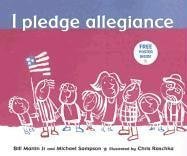
I Pledge of Allegiance by Bill Martin Jr and Michael Sampson
I'm always amazed when someone doesn't know of this title.  Chris Raschka illustrated it using ink and torn paper.  Torn paper is a favorite medium I like to see and use.  It's very forgiving.  This book breaks the Pledge of Allegiance down into small phrases to help define it's meaning.  A commentary in narrative form provides definitions that are easier for children to understand.


Balloons Over Broadway by Melissa Sweet
Was a book I heard lots about,is fairly new and didn't get around to reading it until last month.  I was so happy to have finally read it.  I grew up watching Macy's Thanksgiving Day Parade each year and now my girls and I watch it as we prepare for Thanksgiving.  I never thought to wonder about how it all started.  I never thought about there being a time when there wasn't enormous balloons that were walked by lots of people.  I am still in awe of the beginning of something I have taken for granted for so many years.


Mrs. Harkness and the Panda  by Alicia Potter
Was also illustrated by Melissa Sweet.  This the newest book on my list and my only biography.  While illustrated Melissa Sweet included many nonfiction features to help tell the journey of Mrs. Harkness.  Mrs. Harkness decides to carry out her husbands dream by traveling to China and bringing back a panda.  This happens in a time when women don't travel on their own and explore the jungle.

Remember we are sharing our post in one spot this year over at Reflect and Refine Learning: Building a Learning Community.  Thank you for joining us and sharing your favorite nonfiction books in an effort to help us all with our teaching journey.